What Is a TRON Address and Why AML Checks Matter
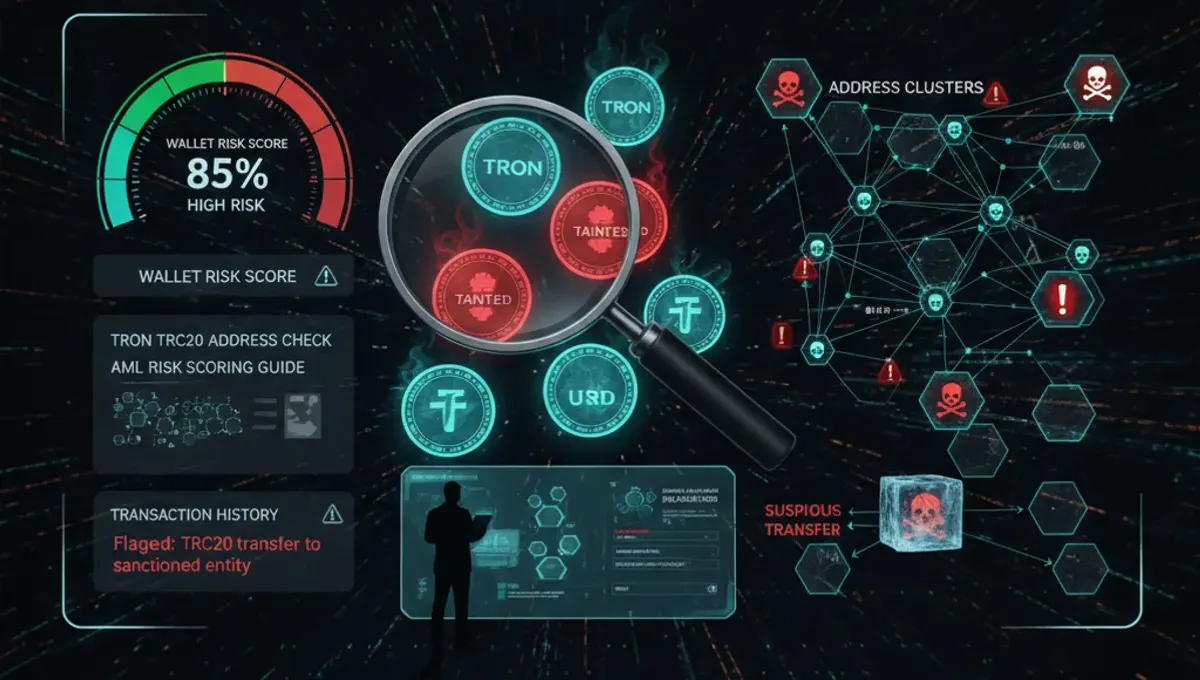
A TRON address is a 34-character alphanumeric string starting with 'T', derived from a private key on the TRON network. TRON hosts the most widely used USDT stablecoin (TRC20 standard), making it a high-volume target for money laundering, sanctions evasion, and stolen fund transfers. Unlike traditional banking, blockchain transactions are irreversible; once you receive funds from a compromised address, you inherit the compliance risk. Exchanges, custodians, and regulated entities now screen TRON addresses against AML watchlists, darknet databases, and transaction history. A single deposit from a flagged address can trigger account freezes, transaction blocks, or regulatory investigations. Running an AML check on a TRON address before accepting payment reduces your exposure to regulatory penalties and operational disruption.
How to Check a TRON Address: Step-by-Step
Follow these steps to perform a TRON address check:
- Copy the TRON address (starts with 'T') from the sender or payment request.
- Visit a trusted AML screening service listed on our verified AML Services page.
- Paste the address into the lookup field and select TRON as the blockchain.
- Review the risk score (typically 0–100, where 0 is clean and 100 is high-risk).
- Check the detailed report for flags: mixer usage, darknet exposure, sanctions matches, stolen funds, or scam associations.
- Cross-reference the transaction history to identify the source of funds.
- Decide whether to accept the payment based on your risk tolerance and compliance policy.
Most AML check services return results within seconds. The report should show the address's first appearance, transaction volume, and any known associations with illicit activity. If the address has received funds from multiple flagged sources, the cumulative risk increases.
Understanding TRON Address Risk Scores and Flags
An AML risk score quantifies the likelihood that a TRON address is involved in illicit activity. Scores typically range from 0 (clean) to 100 (high-risk). Here's what each tier means:
- 0–20: Low risk. Address shows minimal or no connection to known illicit activity.
- 21–50: Medium risk. Address may have received funds from mixers, unverified sources, or minor sanctions exposure.
- 51–80: High risk. Address has direct or indirect links to darknet markets, stolen funds, or sanctioned entities.
- 81–100: Critical risk. Address is flagged for active sanctions, known theft, or major darknet involvement.
Common flags include: mixer usage (privacy-enhancing services that obscure transaction trails), darknet market deposits, stolen funds from exchange hacks, ransomware payments, and OFAC sanctions list matches. A TRON address can accumulate risk over time as it receives funds from multiple sources. Even a single transaction from a flagged address can elevate the overall risk score, though most services weight recent activity more heavily than historical transfers.
TRON Address Lookup: What Information Is Revealed
A TRON address lookup reveals transaction history, balance, and behavioral patterns. Key data points include:
- Total transaction count and volume in TRX and USDT.
- First and last transaction timestamps.
- List of counterparties (addresses the wallet has interacted with).
- Inbound and outbound fund flows.
- Known associations (exchange deposits, mixer inputs, darknet market outputs).
- Sanctions list matches (OFAC, EU, UN designations).
- Cluster analysis (linked wallets controlled by the same entity).
This information helps you trace the origin of funds and assess whether the TRON address belongs to a legitimate business, exchange, individual, or illicit operation. Public blockchain data is immutable, so historical patterns are reliable indicators of behavior. If a TRON address has consistently received funds from exchanges and legitimate sources, it carries lower risk. Conversely, if it has received funds from mixers or darknet markets, the risk is substantially higher.
Common Risk Categories for TRON Addresses
TRON addresses can be flagged for several risk categories:
- Mixers: Addresses that send or receive funds through privacy mixers, which obscure transaction trails and are often used to launder illicit proceeds.
- Darknet markets: Wallets associated with known darknet marketplaces or their operators.
- Stolen funds: Addresses linked to exchange hacks, wallet theft, or other known theft incidents.
- Ransomware: Wallets that have received ransom payments from known ransomware campaigns.
- Sanctions: Addresses matching OFAC, EU, or other government sanctions lists.
- Scams: Wallets associated with Ponzi schemes, rug pulls, or other fraud.
- Gambling: Addresses tied to unlicensed or high-risk gambling platforms (jurisdiction-dependent).
A single TRON address can carry multiple flags. For example, a wallet might receive funds from both a mixer and a darknet market, compounding its risk profile. When you check a TRON address, the report should itemize each flag and provide evidence (transaction hashes, timestamps, linked entities) to support the classification.
What to Do If Your TRON Address or Coins Are Flagged
If you receive a warning that your TRON address or incoming funds are flagged, take these steps:
- Do not panic. A flag does not automatically mean you are guilty of wrongdoing; it indicates elevated risk that requires investigation.
- Review the AML report in detail. Identify which specific flags apply (mixer, sanctions, darknet, etc.) and the evidence cited.
- Trace the source. Contact the sender and ask for documentation of the fund origin. Legitimate businesses can usually provide proof of lawful source.
- Document your findings. Keep records of all communications and evidence of legitimate source.
- Consult your compliance officer or legal advisor if you operate a regulated business.
- If the funds are confirmed to be illicit, do not move them. Report the incident to your local financial regulator or law enforcement if required by your jurisdiction.
- If the funds are legitimate but flagged due to intermediary activity (e.g., the sender used a mixer for privacy), you may accept them at your own risk, but notify your exchange or custodian.
Exchanges and custodians may freeze accounts or block transactions if flagged TRON addresses are detected. Proactive screening before accepting funds is far simpler than dealing with frozen accounts later.
Best Practices for Accepting TRON Payments Safely
To minimize compliance risk when receiving TRON payments:
- Always run an AML check on TRON addresses before accepting large transfers. Use the verified AML services listed on our AML Services page as your starting point.
- Set a risk threshold. For example, reject any address with a risk score above 50, or require additional documentation for medium-risk addresses.
- Request sender information. Ask counterparties to provide their business name, registration details, and the purpose of the transfer.
- Monitor ongoing activity. If you receive multiple transfers from the same TRON address, periodically re-check it for new flags.
- Maintain audit trails. Document every TRON address check, the date, the risk score, and your decision to accept or reject the payment.
- Educate your team. Ensure all staff handling TRON payments understand the importance of AML screening and how to interpret risk reports.
- Use whitelisting. Once you have verified a TRON address as low-risk, add it to an internal whitelist to streamline future transactions.
These practices protect your business from regulatory penalties, frozen accounts, and reputational damage.
Frequently asked questions
How do I check if a TRON address is safe before receiving USDT?
Copy the TRON address and paste it into an AML screening service from our verified AML Services page. The tool will return a risk score and flags within seconds. Review the report for mixer usage, darknet exposure, sanctions matches, or stolen funds. If the risk score is low (0–20) and no critical flags appear, the address is generally safe to receive from.
What does a high risk score on a TRON address mean?
A high risk score (51–100) indicates the TRON address has received funds from illicit sources, mixers, darknet markets, or sanctioned entities. This does not prove you are breaking the law by receiving from it, but it signals elevated compliance risk. Exchanges may freeze your account if you deposit flagged TRON coins. Always investigate the source before accepting high-risk transfers.
Can I get my TRON address flagged for receiving tainted coins?
Yes. If you receive USDT or TRX from a flagged TRON address, your own address may inherit the risk flag. Exchanges and custodians screen deposits and may freeze accounts if tainted coins are detected. This is why checking incoming TRON addresses before accepting payment is critical. Once flagged, reversing the designation is difficult and requires regulatory intervention.
What is a TRON address mixer and why is it a red flag?
A TRON mixer is a service that combines funds from multiple users to obscure transaction trails and hide the origin of money. Mixers are often used to launder illicit proceeds. If a TRON address has received funds from a mixer, it signals an attempt to hide the source, which raises compliance concerns. Most regulated exchanges reject or freeze accounts that interact with mixers.
How often should I re-check a TRON address for AML risk?
Re-check TRON addresses periodically, especially if you receive multiple transfers from the same wallet. Risk scores can change as new transaction data emerges. For high-volume counterparties, monthly or quarterly checks are recommended. For one-time transactions, a single check before accepting payment is usually sufficient.