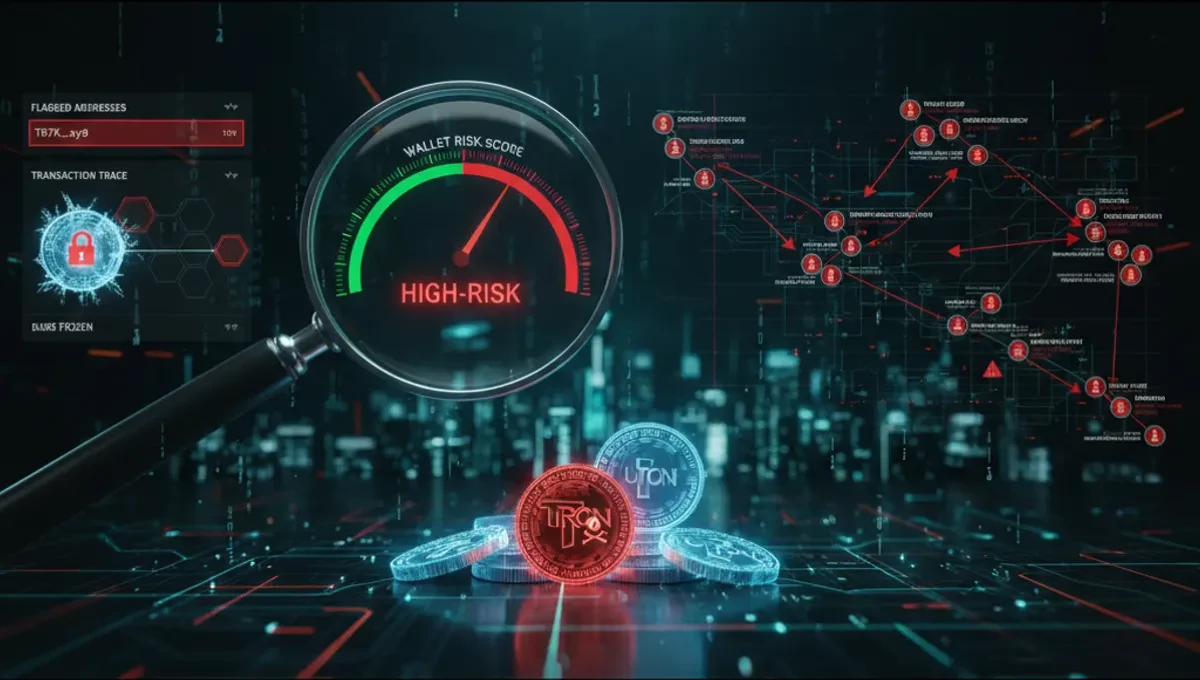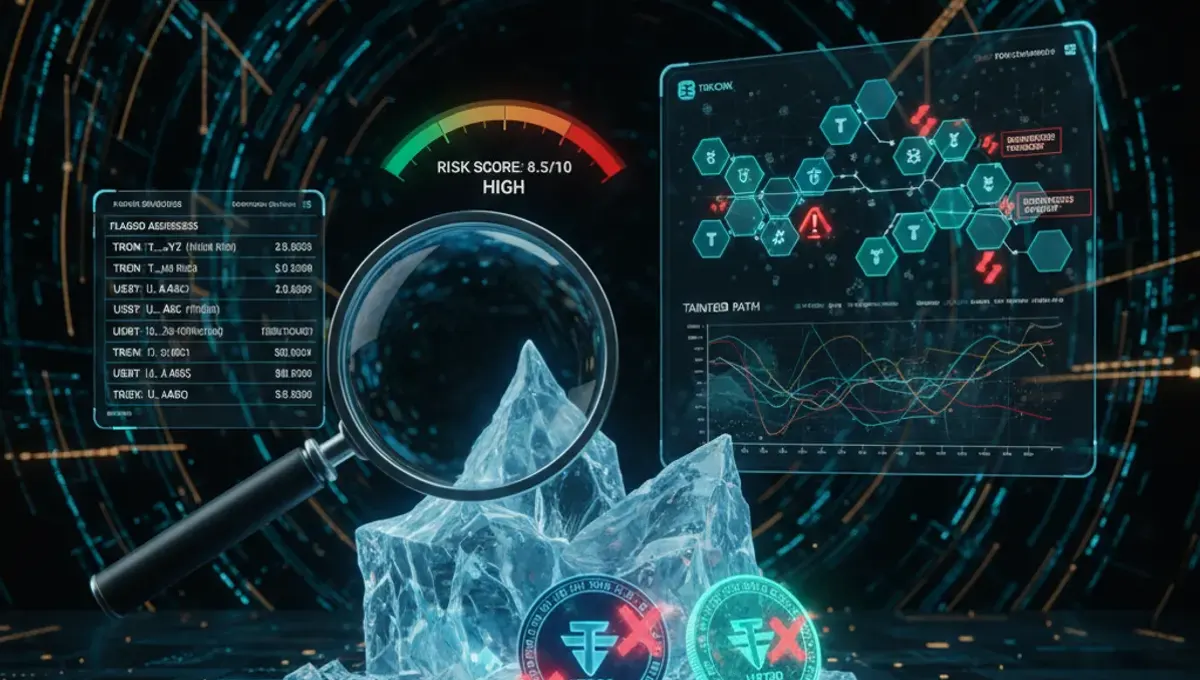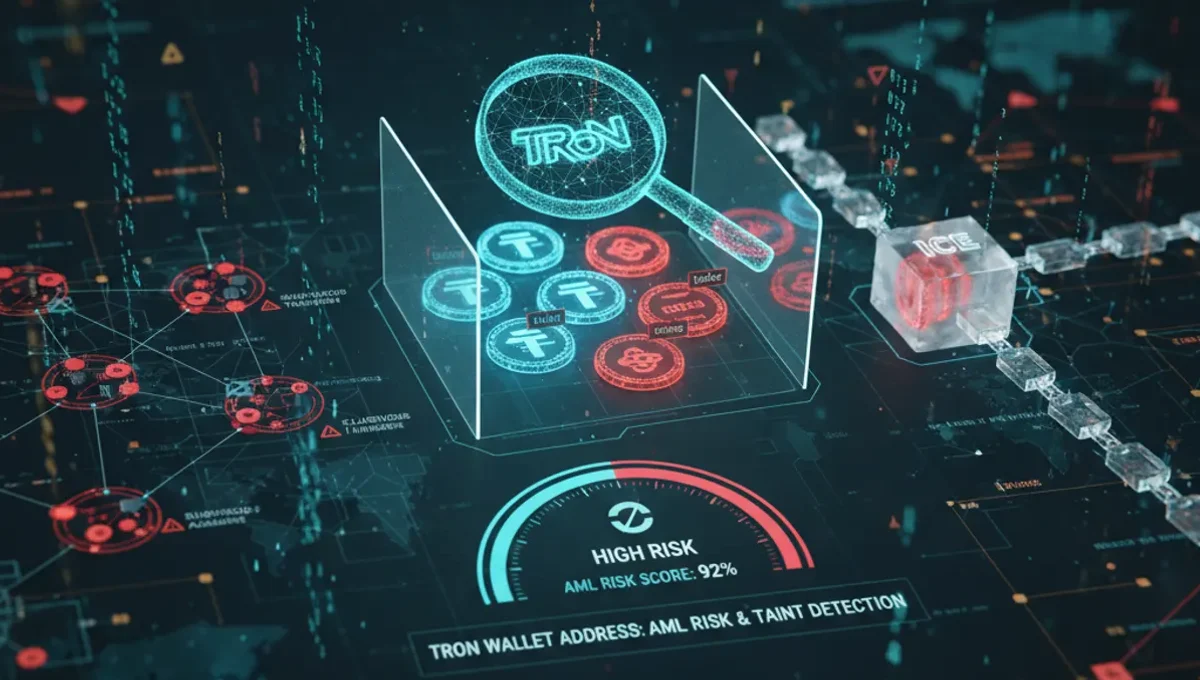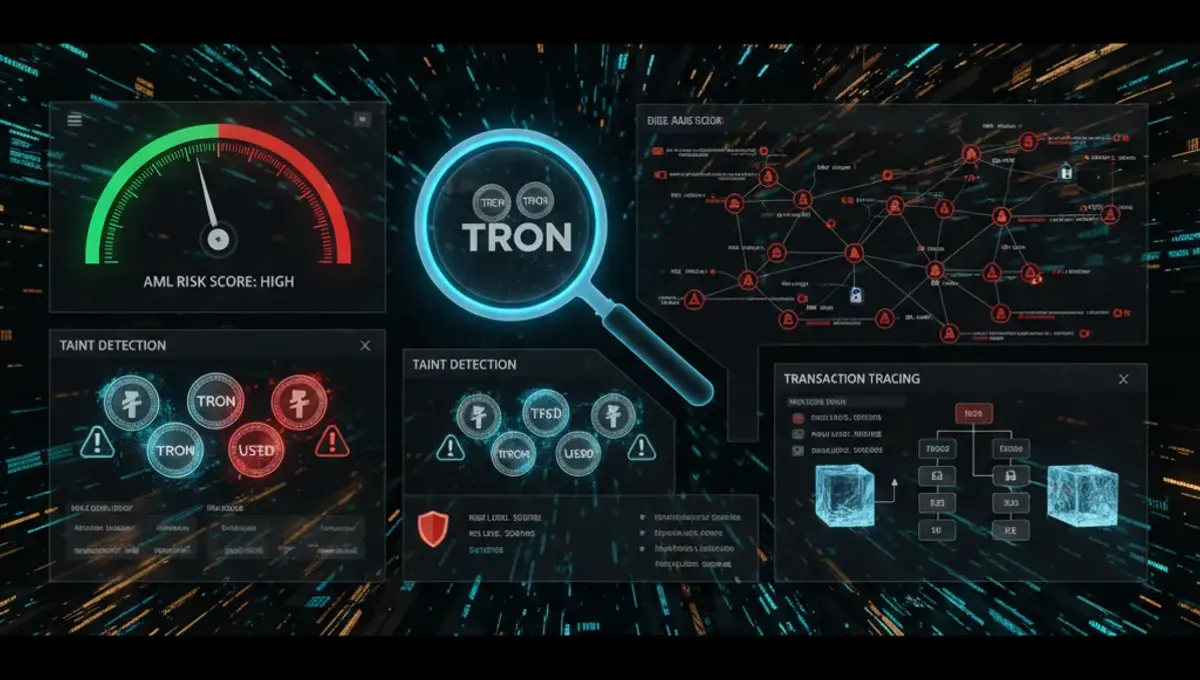
What Is a Tron Address and Why Check It
A Tron address is a unique identifier on the Tron blockchain, formatted as a 34-character string starting with 'T'. It represents a wallet that holds TRX (the native token) and TRC20 tokens like USDT. Checking a Tron address means querying blockchain analytics to uncover its transaction history, fund sources, and risk profile.
You should check a Tron address before receiving large payments because:
- Tainted coins linked to theft, scams, or darknet activity can trigger exchange freezes
- Sanctions-listed entities may have sent funds through intermediary wallets
- Mixers and coin-tumbling services obscure fund origins, raising compliance red flags
- Receiving flagged USDT or TRX can result in your own account being frozen or banned
A Tron address lookup reveals whether funds have passed through high-risk sources, even if the current holder appears legitimate. This is especially critical for merchants, exchanges, and custodians handling customer deposits.
How to Check a Tron Address: Step-by-Step
Follow these steps to perform a Tron address check:
- Copy the Tron address you want to verify (the 34-character string starting with 'T').
- Visit a trusted AML check service that supports Tron and TRC20 tokens.
- Paste the address into the lookup field.
- Review the risk score and transaction history report.
- Check for flags: darknet exposure, mixer involvement, stolen funds, sanctions matches.
- Decide whether to accept the transfer based on the risk level.
Most services display results in seconds. The report typically shows:
- Overall AML risk score (low, medium, high)
- Number of transactions and wallet age
- Exposure to known darknet markets or gambling platforms
- Links to theft reports or scam databases
- Sanctions list matches
For USDT on Tron (TRC20), the same process applies—paste the receiving wallet address and check its history. Our curated list of verified AML services on this site includes tools that support Tron address lookup, making it a safe starting point for wallet screening.
Understanding Tron Address Risk Scores
An AML risk score quantifies the likelihood that a Tron address or its funds are associated with illicit activity. Scores typically range from 0 (very low risk) to 100 (very high risk), though some services use percentages or color-coded levels.
Risk score thresholds:
- 0–20: Low risk. Funds appear clean; minimal darknet or mixer exposure.
- 21–50: Medium risk. Some exposure to high-risk services or unverified sources; acceptable for most business purposes with caution.
- 51–80: High risk. Strong signals of mixer use, darknet involvement, or stolen funds; avoid unless you can verify the source independently.
- 81–100: Critical risk. Likely linked to sanctions, theft, or active darknet markets; do not accept without legal review.
Risk scores are calculated by analyzing on-chain transaction patterns, wallet age, fund sources, and cross-referencing against known darknet addresses, sanctions lists, and theft databases. A Tron address check that returns a high score does not prove guilt, but it signals that accepting those funds carries compliance and reputational risk. Always review the detailed report, not just the score.
What Tron Address Lookup Reveals About Fund Sources
A Tron address lookup traces the origin and movement of funds by examining the blockchain record. Key findings include:
Darknet exposure: If the address has received funds from known darknet market wallets, the report will flag it. This includes marketplaces, mixing services, and gambling platforms.
Mixer involvement: Coin mixers deliberately obscure transaction trails. Receiving USDT or TRX from a mixer address raises compliance concerns because the true source becomes unverifiable.
Stolen funds: If TRX or USDT was stolen in a known hack or scam, blockchain analytics can link it to the theft. Accepting such funds may make you liable for restitution.
Sanctions and PEPs: Tron address checks cross-reference against sanctions lists (OFAC, EU, UN) and politically exposed persons (PEPs) databases. A match means the address is controlled by or linked to a sanctioned entity.
Gambling and high-risk services: Some services flag addresses that have interacted with gambling platforms or unregulated exchanges, which some jurisdictions treat as higher-risk.
The transaction history shows the path of funds backward in time, helping you understand whether the sender received them from a legitimate source or a suspicious intermediary.
Tron Address Meaning: Format and Validation
Understanding Tron address format helps you validate addresses before checking them.
Format: - Tron addresses are 34 characters long - They always begin with the letter 'T' - They use Base58Check encoding (alphanumeric, no lowercase 'l', uppercase 'O', or zero '0') - Example: TJZkchcrJS5v7vj34Z4wQUcgCJPSo3YDoe
Validation: - Copy the full address carefully; even one wrong character makes it invalid - Use a Tron block explorer (like Tronscan) to verify the address exists and has transaction history - Beware of phishing: confirm the address with the sender through a separate, trusted channel - Never assume an address is legitimate just because it exists; always run an AML check
When you check a Tron address, the service validates the format automatically. If the address is malformed, the lookup will fail. If it's valid but has no history, it may be a newly created wallet—lower risk for theft, but still worth checking for sanctions matches or other red flags.
What to Do If a Tron Address Check Flags Your Coins as Tainted
If you receive a high-risk AML score on a Tron address or discover your own USDT/TRX is flagged as tainted, take these steps:
- Do not transfer the funds to an exchange immediately. Exchanges screen deposits and may freeze your account if tainted coins are detected.
- Investigate the source. Contact the sender and ask where the funds originated. Request documentation if it's a business transaction.
- Review the detailed report. Not all high-risk flags mean the funds are stolen—mixers and privacy services raise scores legitimately.
- Consult a compliance officer or legal advisor if the amount is significant or the flag is critical.
- Consider moving the funds to a personal wallet and waiting. Some exchanges have amnesty periods or may accept coins after a holding period.
- If the coins are confirmed stolen, report the incident to law enforcement and the original victim if possible.
Exchanges freeze USDT and TRX deposits linked to theft, sanctions, or darknet activity to comply with AML/KYC regulations. Frozen funds are typically held for investigation and may be returned to the original owner or seized by authorities. Accepting tainted coins knowingly can expose you to criminal liability in some jurisdictions.
Best Practices for Checking Tron Addresses Before Receiving Funds
Implement these practices to minimize risk:
Always check before accepting: Make Tron address checks routine for any transfer over a threshold you define (e.g., $1,000 or higher). For smaller amounts, spot-check regularly.
Use multiple signals: A single AML risk score is one data point. Cross-reference with: - Tronscan block explorer for transaction history - Sanctions list searches (OFAC, EU) - Theft databases and scam reports
Set acceptable risk thresholds: Decide in advance what risk score you will tolerate. Most businesses accept low to medium risk; high-risk transfers require additional verification.
Document your checks: Keep records of addresses checked, scores received, and decisions made. This demonstrates due diligence if regulators or law enforcement inquire.
Use verified AML services: Our curated list of verified AML services on this site includes tools specifically designed for Tron address checks. These services are the safest starting point for wallet screening and offer transparent scoring methodologies.
Verify sender identity: An AML check reveals fund history, not sender identity. Always confirm you are dealing with the person or entity you expect, especially for large transactions.
Educate your team: If you manage customer deposits or payments, ensure staff understand why Tron address checks matter and how to interpret risk scores.
Frequently asked questions
What does a Tron address checker do?
A Tron address checker scans TRX and TRC20 wallets for AML risk, tainted coin history, darknet exposure, and sanctions matches. It returns a risk score and detailed report showing whether funds have passed through high-risk sources like mixers, theft, or darknet markets. Use it before accepting large TRX or USDT transfers to avoid frozen accounts or exchange bans.
How do I check if a Tron address is safe?
Copy the Tron address (starts with 'T', 34 characters), paste it into a verified AML check service, and review the risk score and transaction history. Look for flags: darknet exposure, mixer involvement, stolen funds, or sanctions matches. Scores below 20 are typically low-risk; 51+ warrant caution. Cross-check with Tronscan and sanctions databases for additional verification.
Can I check a Tron address for free?
Some AML services offer limited free Tron address checks, though detailed reports may require a paid subscription. Our curated list of verified AML services on this site includes options with free tiers or trial periods. Free checks usually provide a risk score and basic history; paid services offer deeper analysis, transaction mapping, and ongoing monitoring.
What happens if I receive USDT on Tron from a flagged address?
If you deposit flagged USDT to an exchange, your account may be frozen pending investigation. Exchanges screen deposits for tainted coins to comply with AML regulations. Frozen funds can be held indefinitely or returned to the original owner. Avoid depositing high-risk USDT immediately; verify the source first or consult a compliance advisor.
What is a Tron address and how is it different from Bitcoin?
A Tron address is a 34-character identifier on the Tron blockchain, starting with 'T', that holds TRX and TRC20 tokens like USDT. Bitcoin addresses are shorter and start with '1', '3', or 'bc1'. Both require AML checks before accepting funds, but Tron addresses are checked using Tron-specific analytics tools. The checking process and risk factors are similar across blockchains.