What Is an AML Crypto Check and Why It Matters
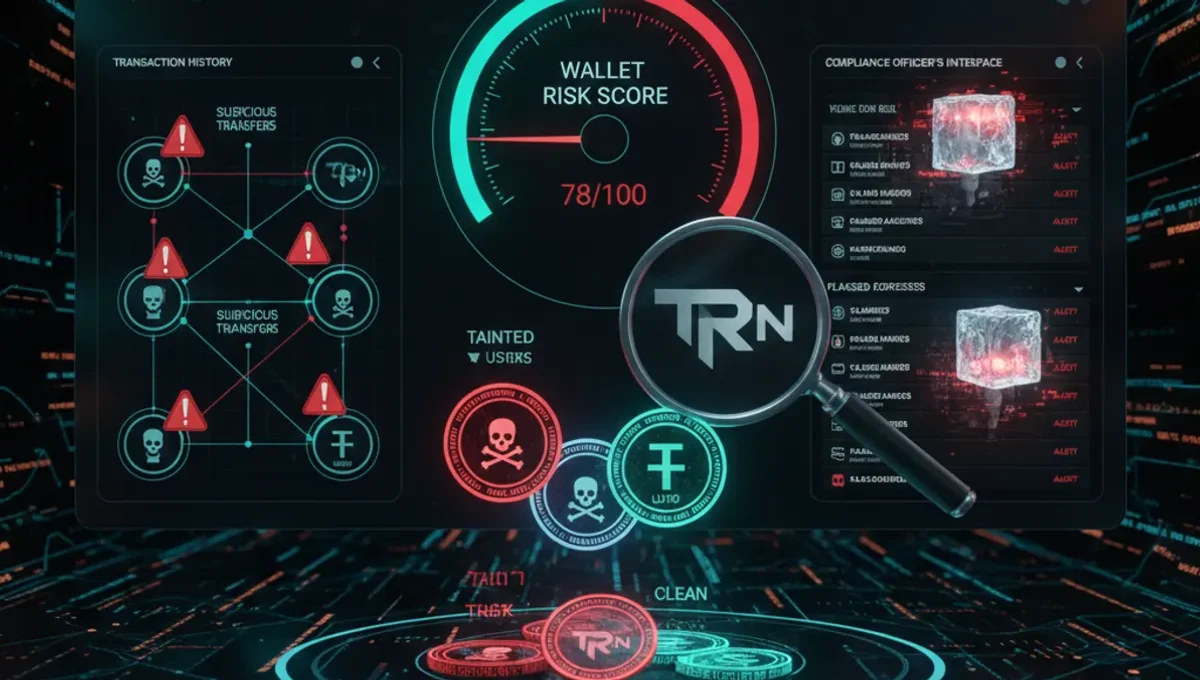
An AML (Anti-Money Laundering) crypto check is a wallet screening that cross-references a blockchain address against known risk indicators: sanctions lists, darknet market wallets, mixer services, stolen funds, and scam addresses. When you receive cryptocurrency, the coins carry a transaction history. If those coins were ever mixed, stolen, or linked to sanctioned entities, exchanges and compliance systems flag them as tainted. A free AML crypto check reveals this history before you deposit or trade, preventing your account from being frozen or banned. Regulatory frameworks like OFAC sanctions and exchange KYC policies mean that holding flagged coins can trigger account restrictions, even if you didn't know the coins were dirty. Running a wallet check is the fastest way to avoid that risk.
How Free AML Crypto Wallet Checks Work
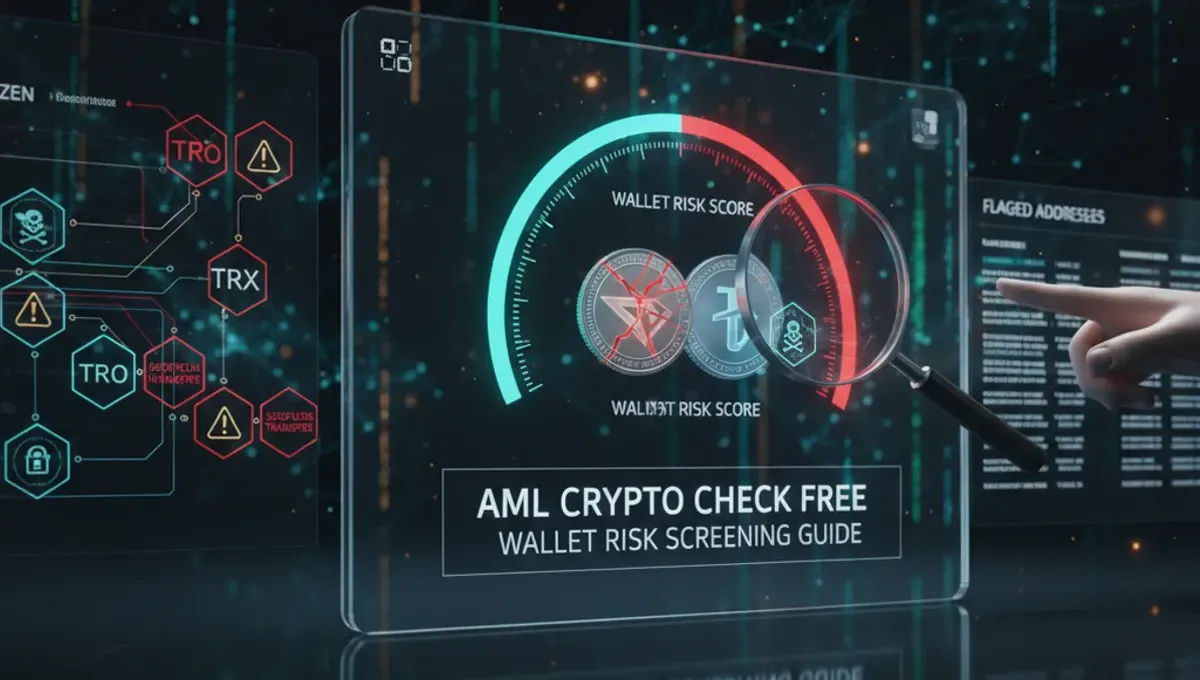
Free AML crypto wallet checks analyze a single address or a small batch of addresses without charging a fee. The process is straightforward: you paste a TRX, USDT, BTC, or ETH address into a screening tool, and the system queries its database of known risk patterns. The tool returns a risk score (typically 0–100 or low/medium/high) and flags specific risk categories: mixer usage, darknet exposure, stolen funds, sanctions matches, or gambling platform links. Most free checks cover basic screening; premium versions add transaction monitoring, historical analysis, and API access for businesses. Free tools usually limit you to a few checks per day or per account. For a single wallet check before a transaction, free options are sufficient. For ongoing compliance or high-volume screening, paid services offer more depth and support.
Step-by-Step: How to Check a Wallet Address for Free
Follow these steps to run a free AML crypto check on any address:
- Choose a free AML screening tool from verified services (check our curated AML Services list for trusted options).
- Copy the wallet address you want to check (TRX, USDT, BTC, or ETH).
- Paste the address into the tool's search box.
- Click 'Check' or 'Analyze' and wait for the scan to complete (usually under 30 seconds).
- Review the risk score and any flagged categories (mixer, darknet, sanctions, stolen funds, gambling).
- Read the detailed report: it will show which risk factors apply and their severity.
- Decide whether to proceed with the transaction based on the risk level and your compliance requirements.
If the address shows a high risk score or multiple red flags, ask the sender for an alternative address or decline the transaction. If the score is low or medium with minor flags, you can usually proceed safely. Document the check result for your records in case of future compliance audits.
Understanding Risk Scores and What They Mean
Most free AML crypto checks assign a numerical risk score or categorical rating. Here's how to interpret them:
Low Risk (0–25 or 'Green'): The address shows no known exposure to sanctions, mixers, or darknet markets. Coins are likely clean. Safe to accept and trade.
Medium Risk (26–50 or 'Yellow'): The address has minor flags—perhaps a small transaction through a mixer or a connection to a gambling platform. Acceptable for most use cases, but monitor the coins if you plan to deposit them on an exchange.
High Risk (51–100 or 'Red'): The address is linked to darknet markets, major mixers, stolen funds, or sanctioned entities. Do not accept these coins; they will likely be frozen by exchanges or trigger compliance holds.
Risk scores are probabilistic, not absolute. A medium-risk address might still be legitimate if the sender used a privacy tool for personal reasons. However, exchanges and compliance teams treat high-risk coins as tainted regardless of intent. When in doubt, use a free AML crypto check telegram bot or web tool to get a second opinion, or consult the AML Services directory on this site for professional screening.
Free vs. Paid AML Crypto Check Services
Free AML crypto checks cover essential screening but have limits. Paid services offer deeper analysis and support.
Free Options: One-time wallet checks, basic risk scoring, limited daily queries, no API access, no transaction history depth.
Paid Options: Batch address screening, real-time transaction monitoring, historical analysis, API integration, priority support, custom risk thresholds, and compliance reporting.
For individuals checking a single address before a transaction, free tools are sufficient. For businesses handling multiple wallets or requiring audit trails, paid services are worth the investment. Many providers offer a free tier with limited checks, so you can test before upgrading. Start with a free AML crypto check to get a quick risk snapshot. If you need ongoing monitoring or handle high volumes, explore the verified AML services listed on this site—they offer transparent pricing and proven accuracy.
What to Do If Your Coins Are Flagged as Tainted
If a free AML crypto check flags your coins as high-risk or tainted, you have limited options:
1. Do not deposit on an exchange: Exchanges scan incoming deposits and will freeze or reject flagged coins. Your account may be restricted pending investigation.
2. Ask the sender for clarification: If you received the coins from a known contact, ask why they show risk flags. They may have used a mixer for privacy or the flag may be a false positive.
3. Request a replacement: If the coins are payment for goods or services, ask the sender to resend from a clean address.
4. Hold and monitor: Some risk flags fade over time as the coins move through legitimate transactions. However, exchanges may still reject them.
5. Consult a compliance professional: If you're a business or hold a large amount, contact a blockchain analytics firm for a detailed review and remediation advice.
Prevention is easier than remediation. Always run a free AML crypto check before accepting coins, especially for large amounts or from unknown sources.
Common Risk Categories: Mixers, Darknet, Sanctions, and Stolen Funds
Free AML crypto checks flag coins based on several risk categories:
Mixers: Services that combine and shuffle coins to obscure transaction trails. Mixer usage is a major red flag for exchanges and compliance teams, even if the coins themselves are not illegal.
Darknet Markets: Wallets linked to known darknet marketplaces. Coins from these addresses are almost always frozen by exchanges.
Sanctions Lists: Addresses matching OFAC or other government sanctions lists. Holding these coins violates law in many jurisdictions.
Stolen Funds: Coins traced back to hacks, theft, or fraud. Victims may reclaim them, and exchanges will freeze accounts holding them.
Gambling Platforms: Coins linked to online gambling. Some exchanges restrict these; others accept them. Risk level depends on your jurisdiction and exchange policy.
Scam Addresses: Wallets associated with Ponzi schemes, rug pulls, or phishing scams. Avoid entirely.
A free AML crypto check will highlight which categories apply to an address. Use this information to decide whether the risk is acceptable for your use case.
Frequently asked questions
Is there a completely free AML crypto check with no limits?
Most free AML crypto checks allow a few queries per day or per account. Completely unlimited free screening is rare. However, a single free check is usually enough to verify one wallet before a transaction. For unlimited checks, you'll need a paid plan. Start with a free tool to test, then upgrade if you need more volume.
Can I check a TRX or USDT address for free?
Yes. Free AML crypto checks support TRX (Tron), USDT (Tether), BTC (Bitcoin), and ETH (Ethereum) addresses. Paste the address into any free screening tool and run the scan. Results appear within seconds. The risk score and flags apply the same way across all blockchains.
What does a high risk score mean for my USDT?
A high risk score (typically 51–100) means the USDT address is linked to mixers, darknet markets, sanctions, or stolen funds. Exchanges will likely freeze or reject deposits from this address. Do not deposit high-risk USDT on an exchange. Ask the sender for a replacement or decline the transaction.
How accurate are free AML crypto checks?
Free AML crypto checks are generally accurate for flagging known high-risk addresses and sanctions matches. However, they may miss newer threats or produce false positives. For critical compliance decisions, verify results with a second tool or consult a professional blockchain analytics service from our AML Services directory.
Can I use an AML crypto check telegram bot for free?
Yes. Some free AML services offer Telegram bots for quick wallet checks. Search for verified AML check services with Telegram integration. These bots are convenient for mobile users but offer the same basic screening as web tools. Always use a bot from a trusted provider to avoid phishing or data theft.