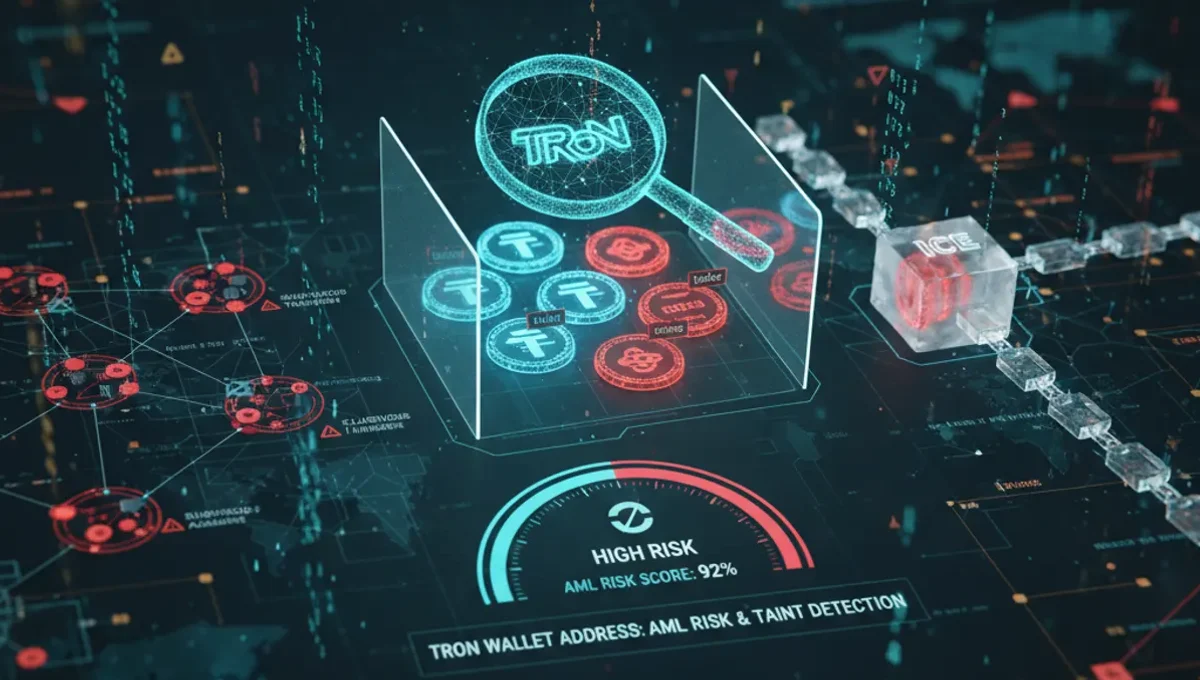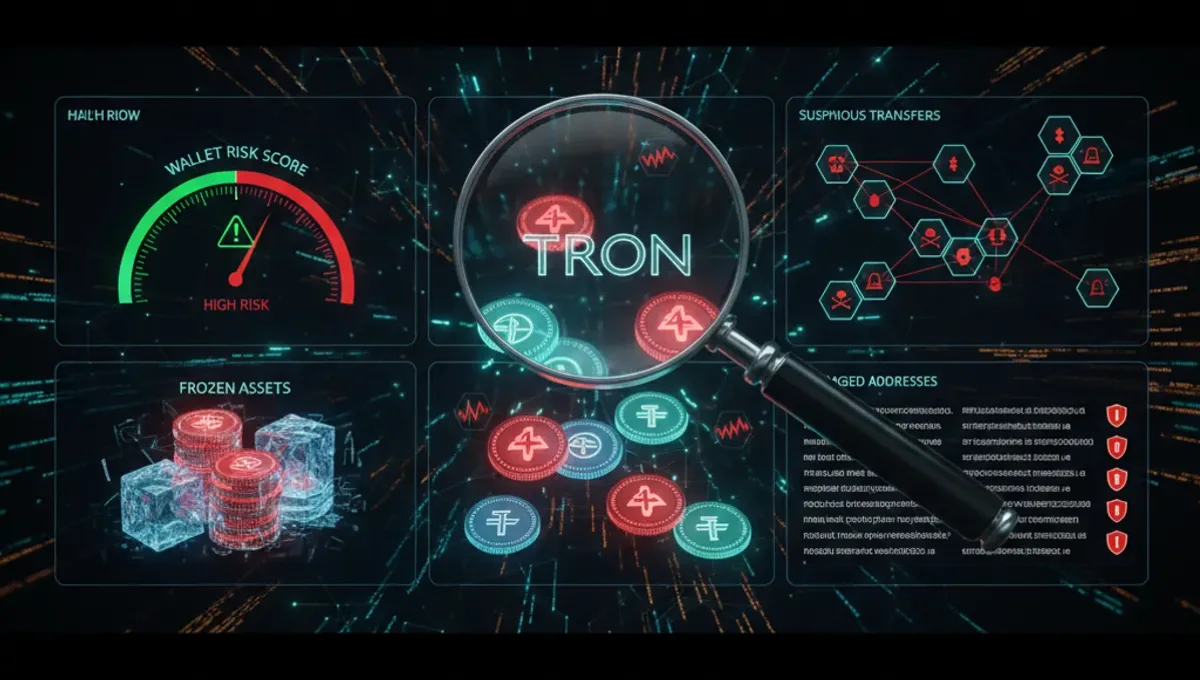
What Is a Tron Address and What Does It Mean
A Tron address is a unique identifier on the Tron blockchain, formatted as a 34-character string starting with 'T' (e.g., TN3W4H6rK8aBc2D5eF9gH1jK3lM5nO7pQ9). It functions like a bank account number—it receives and holds TRX tokens and TRC20-based assets such as USDT. The address meaning is straightforward: it represents a specific wallet on the Tron network. Each address is derived from a private key, and the public address can be shared safely to receive funds. Understanding Tron address structure matters for security: a valid address always starts with 'T', contains only alphanumeric characters, and is case-sensitive. When you perform a Tron address check, you're querying the blockchain ledger to see the transaction history, balance, and risk indicators associated with that address.
How to Check a Tron Address: Step-by-Step Lookup Process
To check a Tron address, follow these steps:
- Obtain the full Tron address (34 characters, starting with 'T').
- Visit a Tron address checker or AML screening service (see our curated list of verified AML services for trusted options).
- Paste the address into the lookup field.
- Review the results: transaction history, balance, and risk score.
- Check for red flags: mixer usage, darknet exposure, sanctions matches, or stolen fund indicators.
- Decide whether to proceed based on the risk level.
Many blockchain explorers like Tronscan allow basic address lookup for free—you can see transactions and token balances. However, a basic Tron address checker does not assess AML risk. For compliance-grade screening, use dedicated AML services that cross-reference addresses against sanctions lists, known darknet wallets, and theft databases. These services assign a risk score (typically 0–100 or low/medium/high) that indicates the likelihood of illicit activity. Our AML Services page lists vetted providers that offer Tron address checking with detailed risk reports.
Understanding Tron Address Risk Scores and AML Ratings
A risk score quantifies the likelihood that a Tron address has been involved in illicit activity. Scores typically range from 0 (clean) to 100 (high risk), or are labeled as low, medium, or high. Here's what different risk levels mean:
- Low (0–20): Minimal darknet or mixer exposure; no sanctions matches; safe to transact.
- Medium (21–60): Some exposure to risky services or unconfirmed associations; use caution.
- High (61–100): Direct links to darknet markets, mixers, stolen funds, or sanctioned entities; avoid unless you have compliance controls.
Risk scores are calculated by analyzing on-chain transaction patterns, address clustering, and cross-referencing against known blacklists (sanctions, stolen funds, darknet markets). A Tron address checker combines these signals to produce a composite score. Important: risk scores are not legal judgments—they flag statistical risk. A medium-risk address may be legitimate but has received funds from risky sources. Exchanges and institutions typically reject addresses scoring above 60–70 to comply with AML regulations. When you check a Tron wallet address for compliance, compare the score against your organization's risk tolerance.
What Triggers High Risk Flags on a Tron Address
Several factors cause a Tron address to receive a high AML risk score:
- Mixer usage: Funds routed through privacy mixers to obscure origin.
- Darknet market exposure: Transactions linked to known dark web marketplaces.
- Stolen funds: Address receives coins flagged as theft proceeds.
- Sanctions matches: Address belongs to or receives from sanctioned entities or jurisdictions.
- Gambling platforms: Some jurisdictions flag gambling-linked addresses as higher risk.
- Scam associations: Address linked to known Ponzi schemes, rug pulls, or fraud.
- Rapid chain-hopping: Frequent transfers across multiple addresses in short timeframes, suggesting layering.
When you check a Tron address, the AML service flags these patterns automatically. A single mixer transaction does not guarantee illicit intent—some users employ mixers for privacy—but it increases scrutiny. Exchanges and custodians use these risk signals to decide whether to accept deposits or freeze accounts. If your Tron address receives flagged funds, you may face delayed withdrawals or account restrictions until you provide proof of legitimate source.
How to Check a Tron Wallet Address Before Receiving Funds
Before accepting a large TRX or USDT transfer, verify the sender's Tron address:
- Ask the sender for their Tron wallet address.
- Use a Tron address checker to pull their risk profile.
- Review the risk score and any flagged transactions.
- Check the address history: does it show legitimate business activity, or frequent rapid transfers.
- Cross-reference against your organization's risk policy (e.g., reject scores above 50).
- If risk is acceptable, proceed; if not, request an alternative payment method or address.
This practice, called transaction screening or KYT (Know Your Transaction), prevents you from receiving tainted coins that could freeze your exchange account or trigger regulatory scrutiny. Tainted USDT or TRX—coins with darknet or theft history—can be rejected by exchanges or custodians, leaving you unable to liquidate. Use our AML Services page to find a Tron address checker that integrates with your workflow. Many services offer API access for real-time screening of incoming transactions. Acceptable risk thresholds vary: retail users often accept medium risk, while regulated institutions accept only low-risk addresses (score below 20–30).
What Happens If Your Tron Address Is Flagged as High Risk
If your Tron address receives a high AML risk score, several consequences may follow:
- Exchange deposit rejection: Centralized exchanges may refuse to credit deposits from your address.
- Account freeze: If you already hold an exchange account, deposits from flagged addresses can trigger a temporary or permanent freeze pending investigation.
- Withdrawal delays: Exchanges may hold your funds for compliance review, delaying access by days or weeks.
- Mandatory documentation: You may need to provide proof of funds source (invoices, contracts, bank statements) to unfreeze your account.
- Account closure: Repeated high-risk activity can result in permanent account termination.
If flagged, contact the exchange's compliance team immediately and provide documentation proving the funds' legitimate source. If the flagged transaction came from a third party (e.g., a payment processor or partner), request their documentation and forward it to the exchange. Avoid moving flagged funds to multiple addresses in rapid succession—this pattern mimics layering and increases risk further. For future transactions, use a Tron address checker before accepting funds, and maintain clear records of all transaction sources. Our AML Services page lists providers that offer remediation guidance if your address is flagged.
Comparing Free vs. Paid Tron Address Checkers
Free tools and paid AML services differ significantly in depth and compliance value:
Free options (Tronscan, blockchain explorers): - Show transaction history and balance. - No risk scoring or AML analysis. - Suitable for curiosity or basic due diligence. - Not sufficient for institutional compliance.
Paid AML services: - Assign risk scores and flag specific risk categories. - Cross-reference against sanctions, darknet, and theft databases. - Provide detailed reports suitable for regulatory audits. - Offer API integration for automated screening. - Include customer support and remediation guidance. - Cost ranges from per-check fees to monthly subscriptions.
For compliance purposes, a paid Tron address checker is essential. Free explorers cannot detect mixer usage or darknet exposure reliably. When choosing a service, verify it covers Tron (TRC20 assets), updates its databases regularly, and provides audit-ready reports. Our curated list of verified AML services on this site includes options for both individual users and enterprises—start there to find a provider matching your needs and budget.
Frequently asked questions
How do I find a Tron address to check
A Tron address is provided by the wallet owner or visible in your transaction history. If someone is sending you TRX or USDT, ask them for their Tron address (starts with 'T', 34 characters). You can also find addresses on Tronscan by searching a transaction hash. Copy the full address carefully—even one wrong character makes it invalid.
What does a low risk score mean for a Tron address
A low risk score (typically 0–20) indicates the address has minimal exposure to darknet markets, mixers, sanctions lists, or stolen funds. It suggests the wallet owner conducts legitimate transactions. Low-risk addresses are generally accepted by exchanges and custodians without additional scrutiny or delays.
Can I check a Tron address anonymously
Yes. Public blockchain explorers like Tronscan allow anonymous address lookups—no login required. However, AML screening services may require registration to access detailed risk reports. Registration does not reveal your identity to the address owner; the lookup is one-way. Your own address remains private unless you voluntarily share it.
Why would a legitimate Tron address have a medium risk score
A medium risk score may reflect past transactions with risky counterparties, mixer usage for privacy, or activity on gambling platforms—none of which prove illicit intent. Legitimate users sometimes employ mixers or receive funds from sources flagged by AML systems. Context matters; review the specific risk factors flagged in the report.
How often should I check a Tron address before transacting
Check a Tron address every time you receive a significant transfer or before sending large amounts. Risk profiles can change if an address receives new flagged funds. For ongoing business relationships, screen addresses at least quarterly. Automated AML services can monitor addresses continuously and alert you to new risk signals.