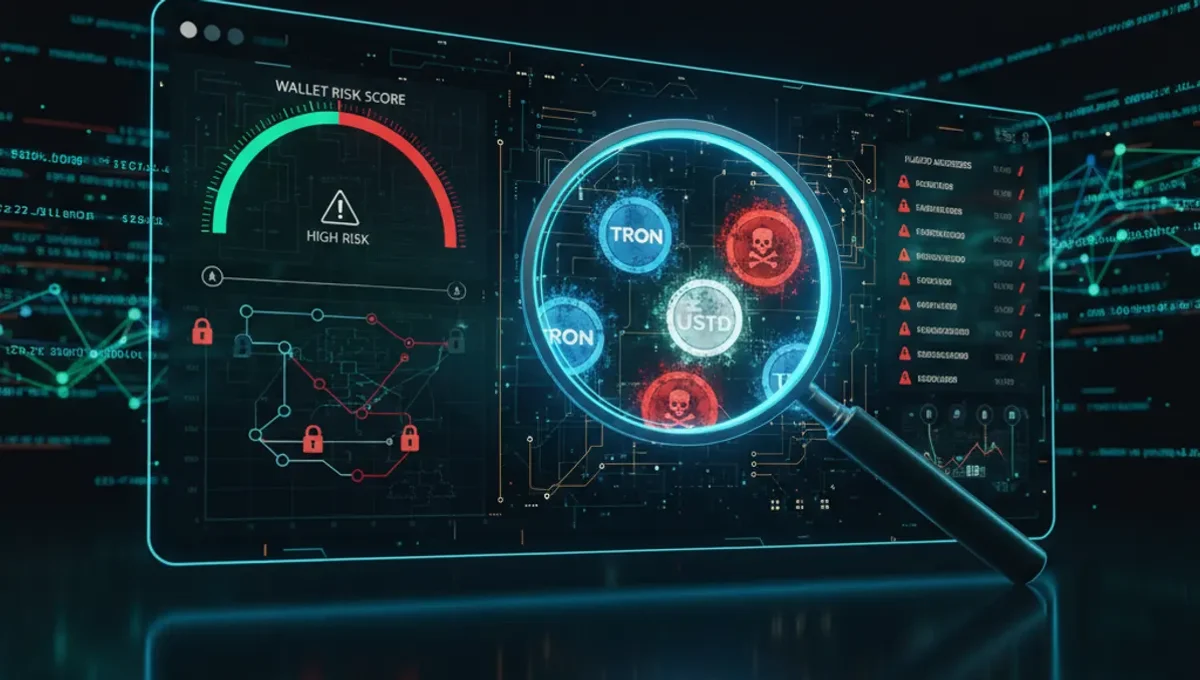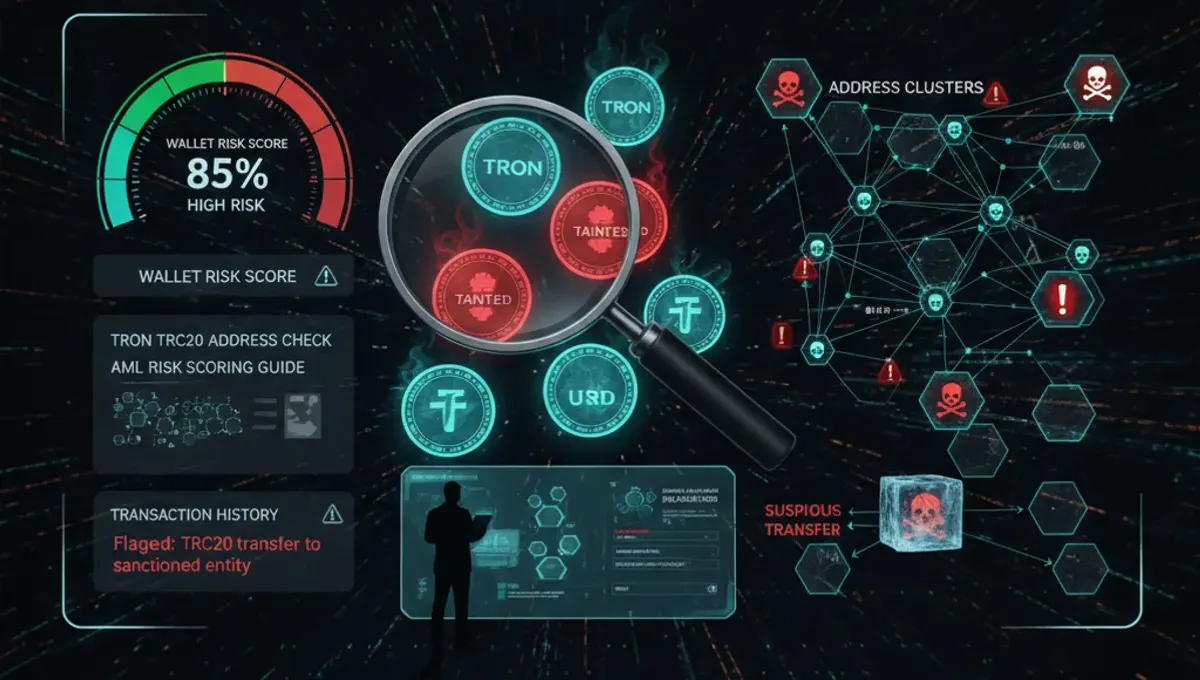
What Is a TRON TRC20 Address and Why Check It?
A TRON TRC20 address is a wallet identifier on the Tron blockchain that holds or transfers TRC20 tokens, including USDT. TRC20 is the Tron network's token standard, similar to ERC20 on Ethereum. Checking a TRON address means querying blockchain analytics to determine whether that wallet has received funds from high-risk sources: darknet markets, mixing services, theft, or sanctioned entities. Exchanges and compliance teams use AML checks on TRON addresses to flag accounts before deposits arrive. A single tainted transaction in a wallet's history can trigger account freezes, delayed withdrawals, or fund seizure. Verifying an address before you receive funds from it reduces the risk of inheriting that compliance liability.
How Does AML Risk Scoring Work for TRON Addresses?
An AML risk score for a TRON address is a numerical rating (typically 0–100 or 0–1000) assigned by blockchain analytics engines based on transaction history. The score reflects the probability that the wallet has been involved in illicit activity. Risk factors include: receiving funds from known darknet wallets, interaction with mixing services, transactions linked to theft or fraud, and exposure to sanctioned entities. Lower scores indicate cleaner transaction history; higher scores suggest elevated compliance risk. Scoring algorithms analyze incoming and outgoing transactions, cluster analysis to identify related wallets, and cross-reference against known bad actors. Exchanges and financial institutions set internal thresholds—some accept scores below 30, others require below 10. Understanding your wallet's score helps you anticipate whether an exchange will accept or freeze your deposit.
Step-by-Step: How to Check a TRON Wallet Address
To check a TRON TRC20 address for AML risk, follow these steps:
- Obtain the full TRON address (begins with 'T' and is 34 characters long).
- Visit a blockchain analytics platform that supports TRON address screening (our curated AML Services list includes verified providers).
- Enter the address into the search field.
- Review the risk score and detailed report, which typically shows: transaction history, linked wallets, source of funds, and flagged risk categories.
- Check for specific red flags: mixer interactions, darknet exposure, stolen fund tags, or sanctions list matches.
- Compare the score against your exchange's or business's acceptable threshold.
- If the score is acceptable, proceed; if flagged, request clarification from the sender or decline the transaction.
Most screening tools return results within seconds. Trusted services on our AML Services page offer both free limited checks and paid detailed reports.
What Risk Score Levels Mean for TRON Addresses
Risk scores are typically interpreted as follows:
- Low risk (0–20): Clean transaction history, no known illicit connections. Safe to accept.
- Medium risk (21–50): Some exposure to high-risk wallets or minor mixer interaction, but no direct theft or sanctions flags. Acceptable for most businesses; verify context.
- High risk (51–80): Clear darknet exposure, multiple mixer transactions, or links to fraud. Requires investigation; many exchanges reject or freeze these deposits.
- Critical risk (81–100): Direct theft, sanctions list match, or heavy darknet involvement. Most exchanges and institutions will block or seize funds.
Thresholds vary by jurisdiction and institution. Regulated exchanges often reject deposits above 30–40; peer-to-peer traders may accept higher scores if they trust the counterparty. Always check your exchange's or payment processor's stated policy before accepting a deposit.
Common Risk Flags in TRON Address Checks
When you check a TRON address, watch for these red flags:
- Mixer exposure: Funds routed through mixing services indicate an attempt to obscure transaction origin.
- Darknet market connection: Wallet has received or sent funds to known darknet marketplace addresses.
- Stolen funds tag: Blockchain analysts have linked the address to theft, ransomware, or fraud.
- Sanctioned entity match: The wallet appears on OFAC or other sanctions lists.
- Gambling platform link: Funds from unregulated gambling sites (jurisdiction-dependent risk).
- Scam or Ponzi scheme: Address associated with known fraudulent projects.
- Rapid churn: Frequent rapid transfers suggest layering or money laundering activity.
A single flag does not always mean rejection—context matters. A wallet that received one mixer transaction years ago may be lower risk than one actively receiving darknet funds. Detailed reports from AML check services explain the context and age of flagged activity.
What to Do If a TRON Address Is Flagged as High Risk
If a check reveals high-risk flags on a TRON address, take these steps:
- Request clarification from the sender: Ask why the address has high-risk activity. Legitimate explanations exist (e.g., they received funds from a hacked account and are now moving them to a new wallet).
- Request a different address: Ask the sender to transfer funds from a cleaner wallet if available.
- Decline the transaction: If the sender cannot explain or provide an alternative, reject the deposit to avoid compliance liability.
- Report to your exchange: If you've already received flagged funds, notify your exchange immediately. Transparency can prevent account freezes.
- Consult compliance: For large transactions or unclear cases, involve your compliance team or legal advisor.
Do not assume high risk means the sender is guilty—it means the address has touched risky activity. Many legitimate users inherit flagged wallets through exchanges or peer transfers. Dialogue and verification are key.
Best Practices for Checking TRON Addresses Before Receiving Funds
Adopt these practices to minimize compliance risk:
- Always check before accepting large deposits: Screen any TRON address sending you significant USDT or TRX.
- Use verified AML services: Our AML Services page lists trusted providers that screen TRON addresses with up-to-date blockchain data.
- Know your exchange's policy: Ask your exchange what risk score threshold triggers a freeze or rejection.
- Document your checks: Keep records of AML checks performed; this demonstrates due diligence if questioned by regulators.
- Check both sender and receiver: Verify your own wallet's score periodically to catch inherited risk.
- Combine multiple data sources: If one service flags an address, cross-check with another to confirm.
- Act on old data cautiously: A wallet flagged years ago may have been cleaned; recent activity matters more.
Regular address screening is now standard practice for exchanges, custodians, and institutional traders. Peer-to-peer traders benefit equally from this due diligence.
Frequently asked questions
How do I check if a TRON address is safe?
Use a blockchain analytics platform to screen the TRON address for AML risk. Enter the address (starting with 'T'), review the risk score, and check for flags like mixer exposure, darknet connections, or theft tags. Compare the score against your exchange's acceptable threshold. Verified services on our AML Services page offer quick, reliable checks.
What does a high AML risk score on a TRON address mean?
A high AML risk score (typically 51–100) indicates the wallet has received or sent funds linked to darknet markets, mixing services, theft, or sanctions. Exchanges often freeze or reject deposits from high-risk addresses. It does not prove guilt but signals compliance concern. Request clarification from the sender or decline the transaction.
Can I check a TRON TRC20 address for free?
Yes, many AML check services offer limited free TRON address screening, though detailed reports may require payment. Free checks typically show basic risk scores and major flags. Paid reports provide deeper transaction history and context. Our AML Services page compares free and paid options to help you choose.
Why would a TRON address be flagged for mixer exposure?
Mixer exposure means the wallet has sent or received funds through a mixing service—a tool designed to obscure transaction origin. Regulators view mixer use as a red flag for money laundering. A single mixer transaction may lower the score moderately; repeated mixer activity raises it significantly. Context and recency matter.
What happens if I receive USDT from a flagged TRON address?
If you deposit USDT from a flagged address, your exchange may freeze your account pending review, delay withdrawals, or seize the funds if they are confirmed stolen or sanctioned. Transparency helps: notify your exchange immediately and provide documentation of the transaction. Proactive AML checks prevent this scenario.