What Is KYT Crypto and How Does It Differ from KYC?
KYT (Know Your Transaction) and KYC (Know Your Customer) serve different compliance purposes. KYC verifies the identity of a person opening an account—name, address, ID verification—and happens once at signup. KYT crypto monitoring, by contrast, tracks transactions on the blockchain continuously, analyzing wallet behavior and transaction history to detect risk patterns.
KYT meaning crypto refers to the real-time screening of on-chain activity. When you receive USDT or TRX, a KYT system checks whether those coins have been associated with high-risk sources: darknet marketplaces, ransomware payments, mixing services, or sanctioned entities. KYT blockchain analysis does not require personal identity; it works purely on transaction data and address clustering. This is why exchanges and custodians use both: KYC to onboard users, and KYT to monitor ongoing transaction flow and flag suspicious deposits or withdrawals.
How Does Blockchain Transaction Monitoring Work?
Blockchain transaction monitoring uses heuristics and machine learning to track coin movement across addresses. The process follows these steps:
- Address clustering: The system groups addresses likely controlled by the same entity (e.g., exchange wallets, mixing service inputs and outputs).
- Risk scoring: Each address receives a score based on transaction history, counterparty risk, and behavioral patterns.
- Source tracing: The system traces coins backward through the blockchain to identify their origin—whether they came from a known mixer, darknet market, or legitimate exchange.
- Flagging: Addresses or transactions exceeding a risk threshold trigger alerts for compliance teams.
- Ongoing monitoring: As new transactions occur, the address risk profile updates in real time.
KYT crypto systems maintain databases of known high-risk addresses (mixers, gambling platforms, sanctioned entities) and compare incoming transactions against these lists. When you deposit USDT or TRX to an exchange, their KYT system checks your wallet's history. If coins are flagged as tainted or linked to illicit activity, the exchange may freeze the deposit, request additional documentation, or reject it entirely.
What Risk Categories Does KYT Blockchain Detection Flag?
KYT blockchain monitoring categorizes risk into distinct types:
• Mixers and tumblers: Services designed to obscure coin origin by combining and splitting transactions. • Darknet markets: Addresses associated with illegal marketplaces (Silk Road successors, ransomware payment sites). • Stolen funds: Coins traced to theft, hacking, or fraud incidents. • Sanctioned entities: Addresses linked to individuals or organizations on OFAC or other sanctions lists. • Ransomware payments: Cryptocurrency received as ransom demands. • Gambling platforms: High-risk exchanges and betting sites (varies by jurisdiction). • Scam addresses: Wallets associated with Ponzi schemes, rug pulls, or phishing attacks.
Each category carries different compliance weight. Sanctioned addresses trigger mandatory reporting and account freezes. Mixer exposure may result in transaction delays or rejection. Stolen funds can lead to account bans if the exchange's KYT system detects them. Understanding these categories helps you assess whether coins you are about to receive carry unacceptable risk.
How to Check a Wallet's KYT Risk Score Before Receiving Crypto
Before accepting USDT, TRX, BTC, or ETH from an unknown source, you can perform a KYT check on the sending address:
- Obtain the sender's wallet address (e.g., a TRX address starting with T, or a BTC address).
- Use a blockchain transaction monitoring service to scan the address. Our curated list of verified AML services on the AML Services page includes tools that perform KYT screening and provide risk scores.
- Review the risk score and flagged categories. Most services use a scale (low, medium, high, critical) or a numerical score.
- Check the transaction history: Does the address show recent activity with known mixers or darknet markets?
- Assess the risk tolerance for your use case. If you are a business or exchange, even medium risk may be unacceptable. If you are a private user, low to medium risk is typically acceptable.
- Decide: Accept the transaction, request coins from a different address, or decline.
This simple step prevents you from receiving tainted coins that could trigger frozen USDT, exchange account bans, or compliance investigations later.
What Do KYT Risk Score Levels Mean?
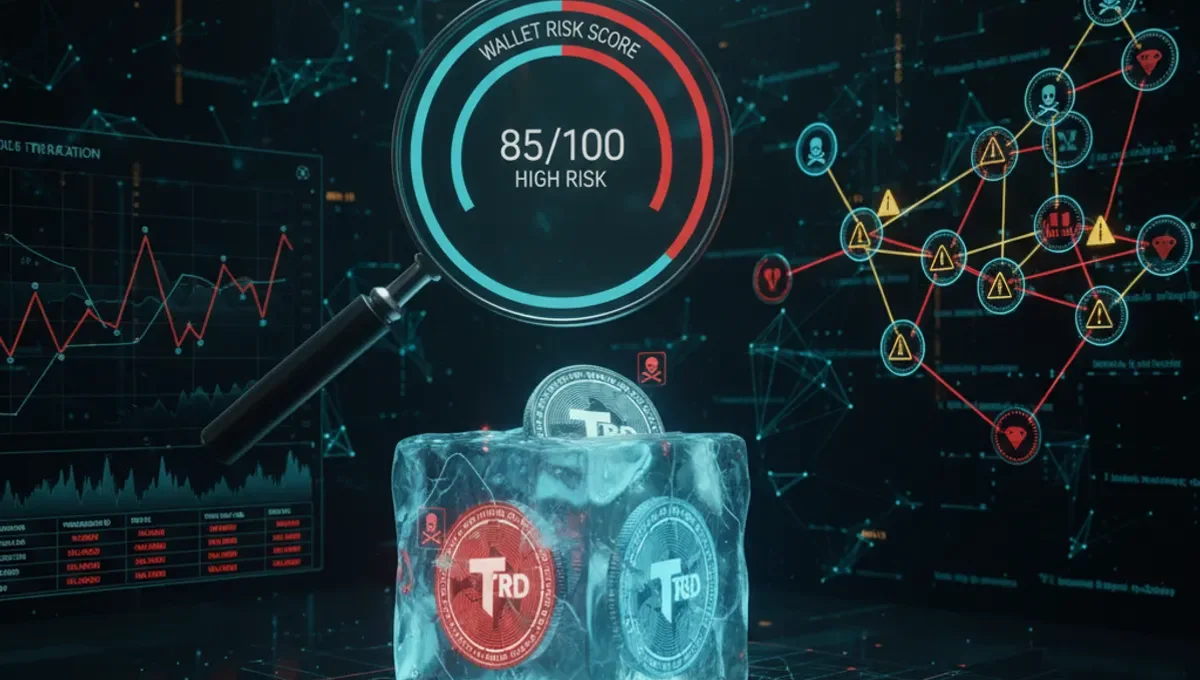
KYT blockchain systems assign risk scores to addresses, typically on a scale of 0–100 or in categorical levels. Here is how to interpret them:
• Low (0–20): Address shows minimal high-risk activity. Coins are likely from legitimate sources. Safe to receive. • Medium (21–50): Address has some exposure to risky services or unconfirmed activity. Acceptable for most private users; businesses may request additional documentation. • High (51–80): Address shows clear links to mixers, gambling, or unverified sources. Many exchanges will freeze or reject deposits. Proceed with caution. • Critical (81–100): Address is linked to sanctioned entities, darknet markets, ransomware, or theft. Exchanges will freeze funds and may report to authorities. Do not accept.
Thresholds vary by jurisdiction and institution. Regulated exchanges typically reject critical and high-risk deposits automatically. Some accept medium-risk coins with enhanced due diligence (additional documentation). When checking a wallet before receiving USDT or TRX, aim for low to medium risk. If a sender cannot provide a low-risk address, reconsider the transaction.
What Happens When Coins Are Flagged as Tainted?
If you receive tainted coins or coins flagged by KYT blockchain monitoring, several outcomes are possible:
• Deposit freeze: The exchange holds your USDT or TRX pending investigation. This can last days to weeks. • Account restrictions: Your account may be limited to withdrawals only; you cannot trade or deposit further. • Forced withdrawal: The exchange may require you to send the coins to an external wallet or back to the sender. • Account closure: In severe cases (sanctioned addresses, stolen funds), the exchange closes your account and may report you to authorities. • Compliance hold: You may be asked to provide proof of funds origin (invoice, receipt, transaction record from the sender).
To avoid this, always check the sending address's KYT risk score before accepting large transfers. If you have already received flagged coins, contact the exchange's compliance team immediately, provide documentation of the transaction's legitimacy, and cooperate with their investigation. Using the verified AML services listed on our AML Services page before accepting transfers is the most reliable way to prevent frozen USDT and account bans.
KYT Crypto Meaning: Key Takeaways for Wallet Screening
KYT crypto meaning boils down to continuous, on-chain risk assessment. It is the mechanism that exchanges, custodians, and compliance teams use to detect tainted coins, darknet exposure, and sanctions violations in real time. Unlike a one-time KYC check, KYT blockchain monitoring is ongoing and automated.
For individual users and businesses, the practical implication is clear: always verify the source address before receiving significant amounts of USDT, TRX, BTC, or ETH. A quick KYT check takes minutes and can save you from frozen funds, account bans, and compliance headaches. Start with the trusted AML services listed on our AML Services page—they provide transparent risk scoring, clear flagging of high-risk categories, and detailed transaction history so you can make an informed decision. Whether you are a trader, business owner, or casual user, understanding KYT blockchain monitoring and performing wallet screening before accepting crypto is essential due diligence in today's compliance-focused ecosystem.
Frequently asked questions
What is the difference between KYT and KYC in crypto?
KYC (Know Your Customer) verifies identity once at account signup. KYT (Know Your Transaction) monitors blockchain transactions continuously to detect risk, tainted coins, and illicit activity. KYC is static; KYT is dynamic and ongoing. Both are required for regulatory compliance.
How does KYT blockchain detect tainted coins?
KYT systems trace coins backward through the blockchain using address clustering and transaction analysis. They compare addresses against databases of known high-risk sources: mixers, darknet markets, sanctioned entities, and theft incidents. If coins originate from these sources, they are flagged as tainted.
What happens if I receive USDT flagged by KYT monitoring?
The exchange may freeze your deposit pending investigation, restrict your account, or reject the transaction entirely. You may be asked to provide proof of funds origin. In severe cases (sanctioned addresses), your account could be closed. Always check the sender's address risk score before accepting transfers.
What is an acceptable KYT risk score for receiving crypto?
Low risk (0–20) is ideal and safe for all users. Medium risk (21–50) is acceptable for most private users but may trigger enhanced due diligence at exchanges. High (51–80) and critical (81–100) risk should be avoided; exchanges typically freeze or reject these deposits.
How do I check a wallet's KYT risk score before receiving coins?
Obtain the sender's address and use a blockchain transaction monitoring service to scan it. Our verified AML services page lists trusted tools that provide KYT screening, risk scores, and transaction history. Review the score and flagged categories, then decide whether to accept the transfer.